Spray Foam Insulation in Glencairn, ON
Foam for rim joists and floors over cold space, blown-in for open attic floors, chosen to suit the brick houses of Glencairn and Caledonia-Fairbanks.
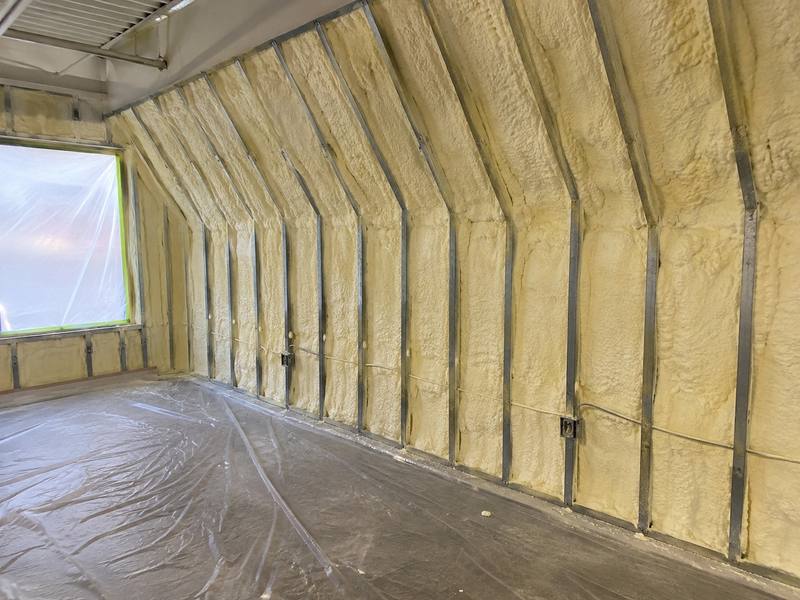
Our crew puts in spray foam insulation in Glencairn, across the M6B postal area, and this page also covers Caledonia-Fairbanks (M6E). We're about 7 km away.
Bungalows and back splits south of Lawrence
Homes in southern Yorkdale–Glen Park, south of Lawrence, mostly date to the 1950s and 1960s, when uniform bungalows and back splits went up. It is a suburban community of brick houses, with Glencairn station inside the neighbourhood.
A cold lower room in a back split usually comes from what is under it or beside it. That lower room may sit over a crawl space or next to a garage. Neither is heated, and both draw warmth out of the room through the subfloor.
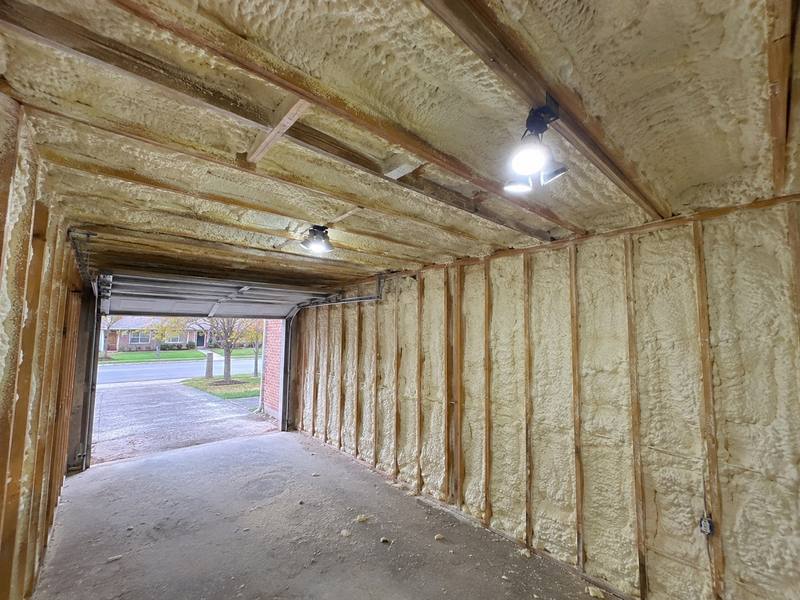
For a crawl space, closed-cell spray foam on the crawl space walls and the rim joist keeps cold air and damp away from the floor above. A garage is a different job: we look at how the garage ceiling is built before we say which material goes in. Our page on cold, drafty floors over a crawl space or garage traces that floor back to its cause.
Caledonia-Fairbanks: interwar houses
Most of Caledonia-Fairbanks was planned in the 1920s and 1930s. The houses are largely small single-family 2 and 1½ storey detached homes on north-south streets, between Dufferin Street and the rail lines.
In a 1½ storey house, the upstairs rooms sit partly inside the roof. Sloped ceilings and short knee walls leave very little depth for insulation. When your upstairs bakes in July, the heat is coming in through those thin, sloped spots.
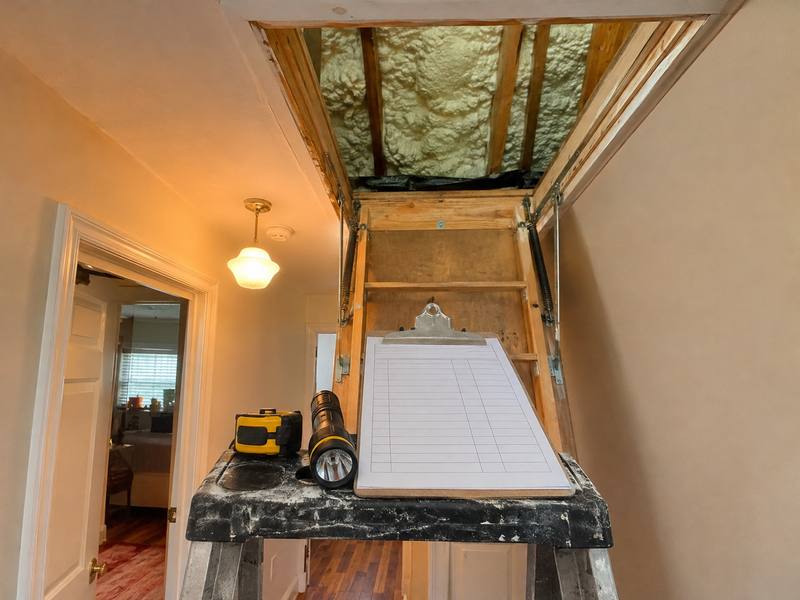
Spray foam suits a narrow sloped bay because it fills the space from the inside and needs no open room above it. To reach a closed slope, the drywall comes off (or the work is done from above during a reroof), and who closes it up again is agreed on the quote. A 2 storey house with an open attic floor is different: blown-in fibreglass or cellulose fills that floor instead. Our page on why your upstairs bakes in July covers the cause and the fix.
Foam where it's tight, blown-in where it's open
In Glencairn and Caledonia-Fairbanks houses alike, the space decides the material.
Rim joists and sill plates
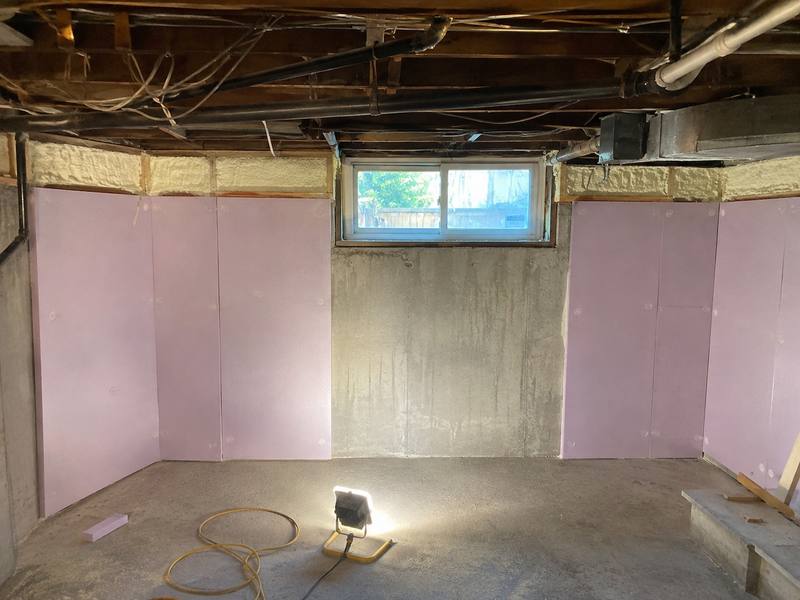
The rim joist runs along the top of the basement wall, where the floor framing sits on the foundation, with the sill plate under it. A draft along the top of your basement wall usually starts there. Closed-cell foam sprayed into each bay covers the wood and the sill plate in one layer and acts as its own vapour barrier. Our basement and crawl space insulation page covers that work in full.
Floors over unheated space
A floor over a crawl space loses warmth through every joist bay, and pipes and wires cut those bays into odd shapes. Foam fills each shape completely. A cut batt leaves gaps at the edges. Once the bays are filled, the floor above stops feeling cold underfoot.
Open attic floors
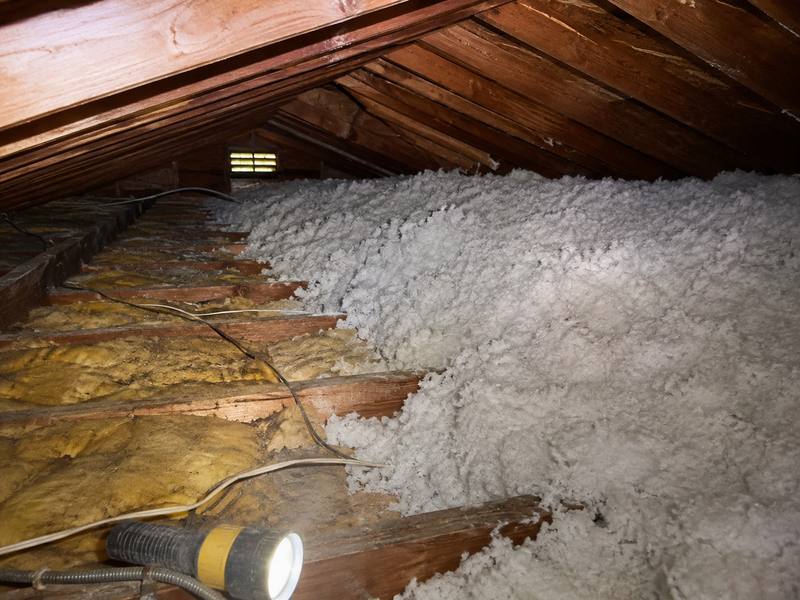
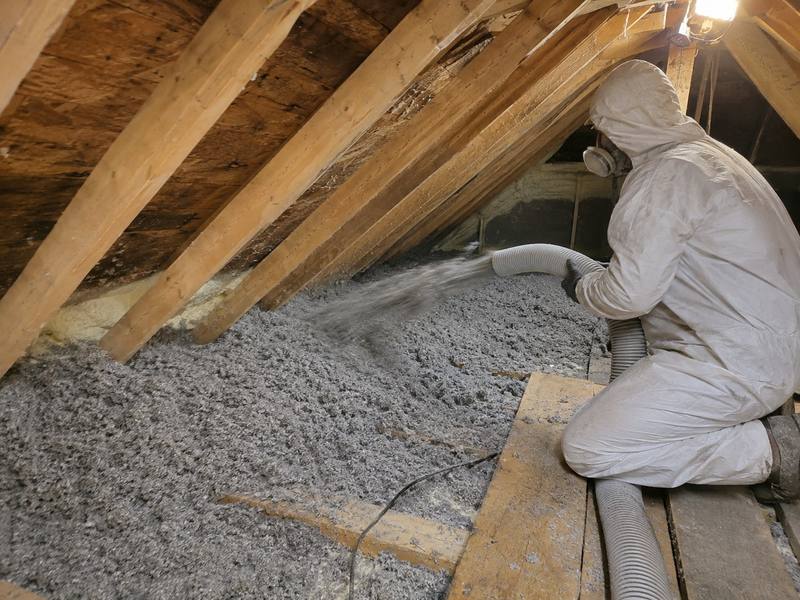
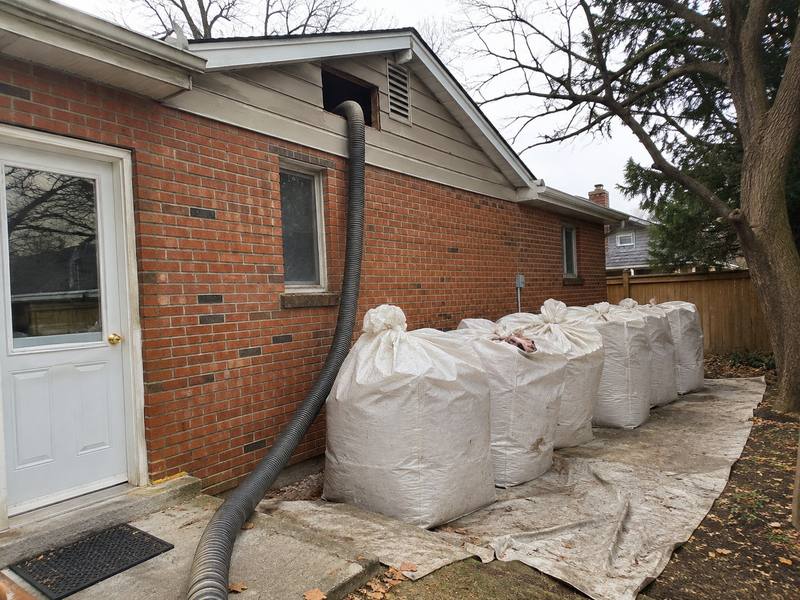
On an attic floor with clear room above the joists, blown-in fibreglass or cellulose spreads evenly, settles around the joists and can be topped up later. If there is vermiculite in the attic, our crew stops and leaves it alone. A qualified lab or abatement firm should test it before any work goes ahead.
Nearby: Lawrence Manor, North Park and Downsview
Our Lawrence Manor page covers spray foam for homes in that neighbourhood.
A little further west, houses are covered on our North Park page.
For homes on the other side, there is the Downsview page.
Our home page lists every service and area we cover.
Local details for Glencairn
- Postal codes: M6B, M6E
- Distance: About 7 km away in a straight line
- Permit rules: toronto.ca
- Nearby: Lawrence Manor, North Park, Downsview
FAQ
Insulation questions from Glencairn
When the lower room sits over a crawl space, we spray closed-cell foam on the crawl space walls and the rim joist under it, which keeps cold air and damp off the subfloor. When it sits beside a garage, we check how the garage ceiling is built first, then tell you which material suits it.
Spray foam suits the sloped ceilings and knee walls of a 1½ storey house, and blown-in suits an open attic floor in a 2 storey. Empty wall cavities can be packed with blown-in cellulose without opening the whole wall. If we find vermiculite in the attic, we leave it alone until a qualified lab or abatement firm has tested it.
No. Adding or replacing insulation needs no building permit from the City, in Glencairn or Caledonia-Fairbanks, though the Zoning Bylaw still applies.

Get a quote
Arrange an insulation visit in Glencairn
Call (437) 563-1415 or send the form. Tell us which room is cold, drafty or hot. We will come look at the spot behind it and give you a straight written quote.