Spray Foam Insulation in Lawrence Manor, ON
Spray foam for the tight, leaky spots in Lawrence Manor and Lawrence Heights houses. Blown-in insulation where there is open room to fill.
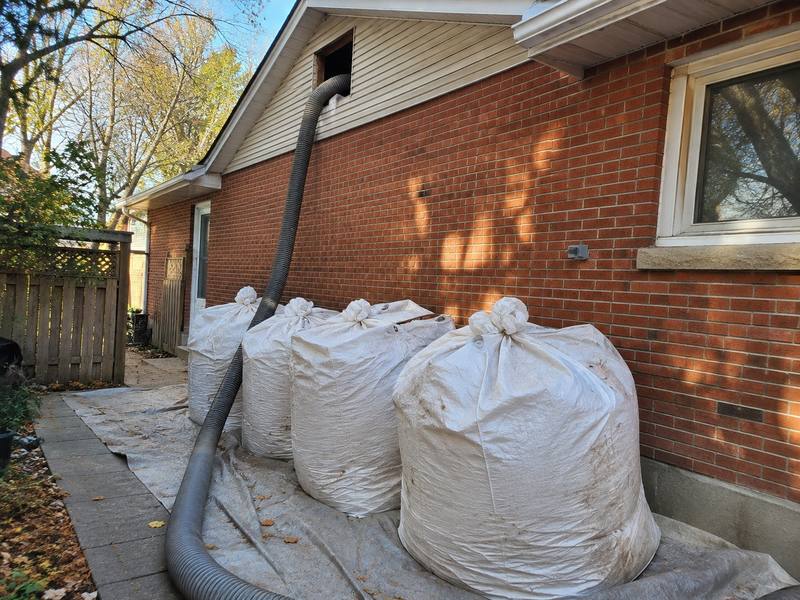
We install spray foam insulation in Lawrence Manor, and blown-in cellulose or fibreglass in the parts of a house with open room to fill. Our crew is about 6 km away. The M6A postal area covers both Lawrence Manor and Lawrence Heights.
1940s streets west of Bathurst
Lawrence Manor sits between Bathurst Street, Highway 401, the Allen and Lawrence Avenue. The Canada Mortgage and Housing Corporation developed it in the 1940s, and the side streets west of Bathurst are mostly single homes and low-rise apartments.
A house from the 1940s may have little or nothing in the walls and a thin layer on the attic floor. You notice it as a bedroom that never warms up, or outside walls that feel cold to the hand in January. Heat goes straight out through the empty wall cavity and the bare ceiling.
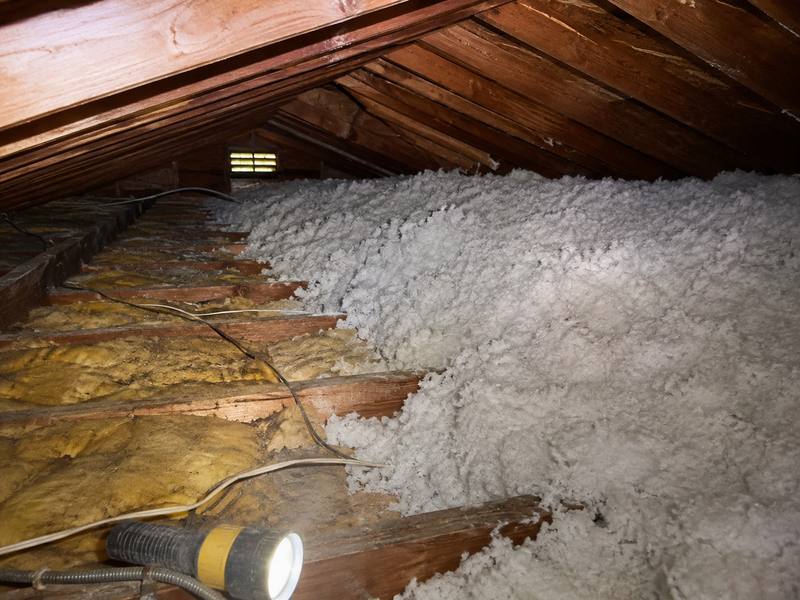
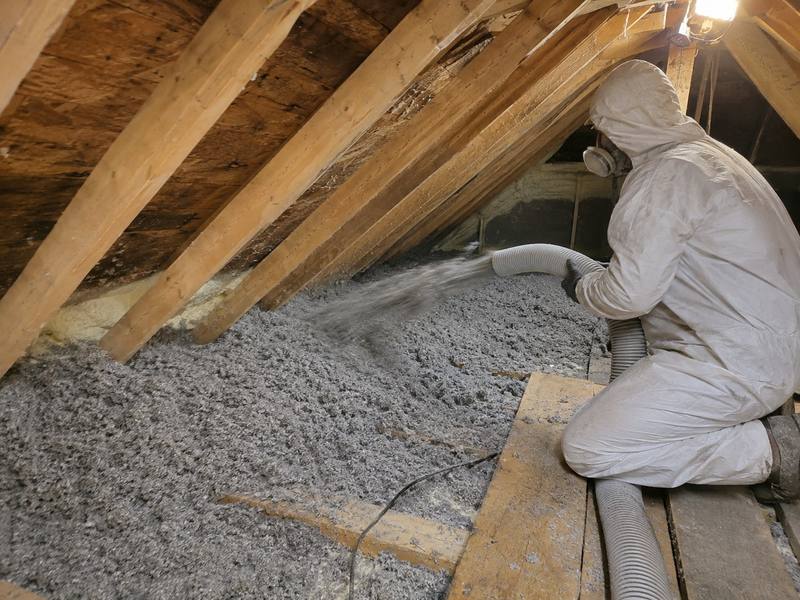
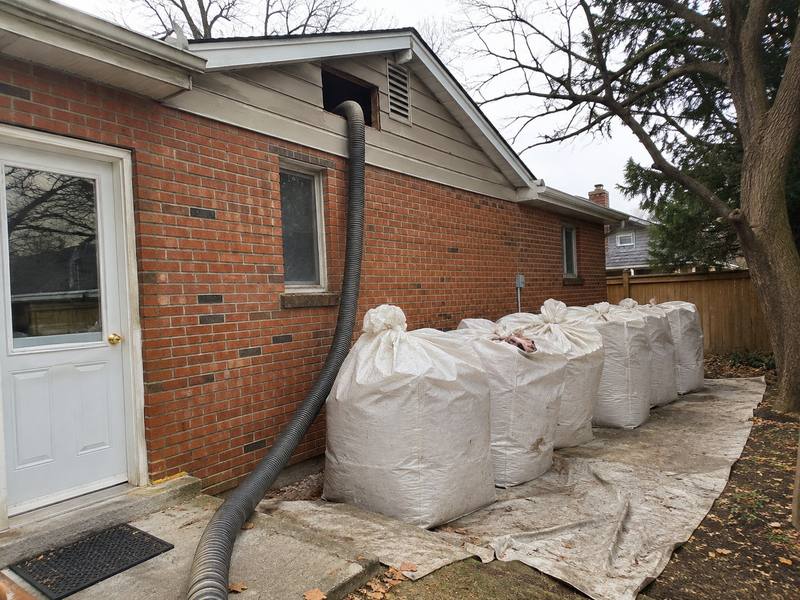
Spray foam is the wrong tool for a closed wall. We drill small holes in each stud bay, dense-pack the empty cavity with blown-in cellulose, then plug the holes. A thin attic floor with open room above it gets a deep layer of blown-in too. Foam goes where loose fill can't do the job: the gaps where wiring and plumbing run up into the attic, and the top plates of the walls below.
Flattened insulation, or insulation full of mouse droppings, comes out first. We remove it and clean up before anything new goes in.
Storey-and-a-half houses in Lawrence Heights
Half of Lawrence Heights is a post World War II development of bungalows and storey-and-a-half dwellings. In a storey-and-a-half house, the upstairs rooms sit partly inside the roof. Ceilings slope down to short knee walls, and behind each knee wall is a low, unheated space.
When an upstairs bakes in July and goes cold in winter, the sloped ceilings are often behind it. There is little room between the ceiling and the roof deck, so often only a thin batt fits, or nothing at all. The sun heats the shingles and that heat comes straight through.
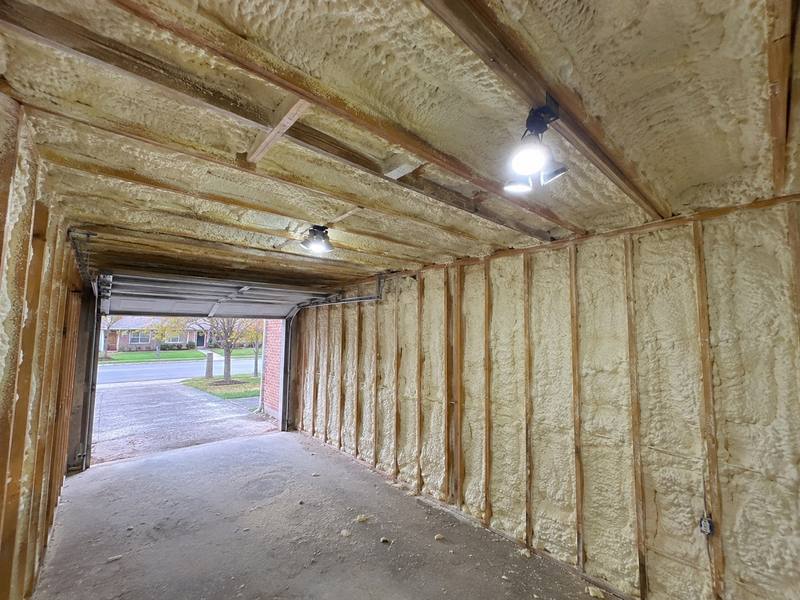
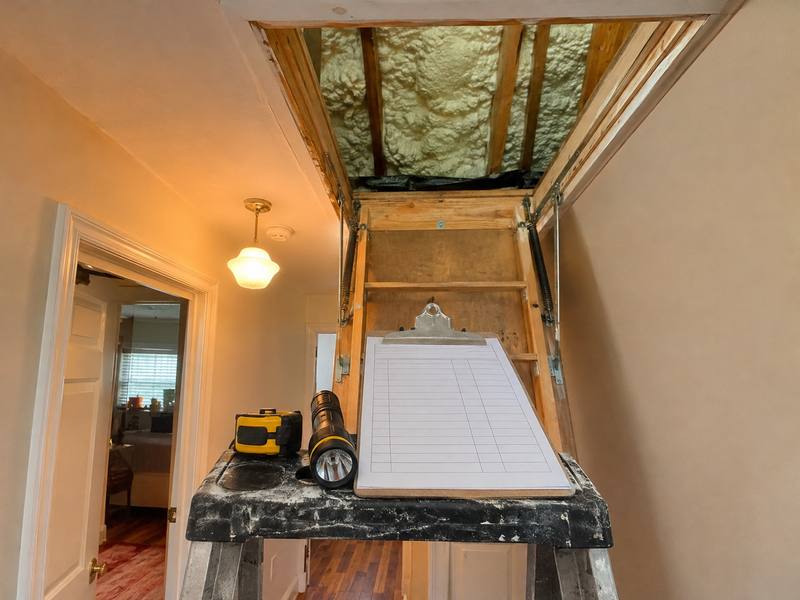
On houses of this shape in Lawrence Manor and Lawrence Heights, the slopes are where spray foam belongs. Closed-cell foam puts a lot of insulation into a thin layer and stops air at the same time, which is what a tight cavity needs. Reaching a closed slope means taking the drywall off, or working from above during a reroof, and the quote says who closes it up again. The flat ceiling at the top and the attic floor behind the knee walls have open room, so they get blown-in fibreglass or cellulose. Our page on why your upstairs bakes in July goes into the cause in more detail.
The basement end
A cold main floor often starts at the rim joist, just above the foundation wall. Outside air leaks in along that sill plate, and fibreglass batts pushed between the joists do little to stop it.
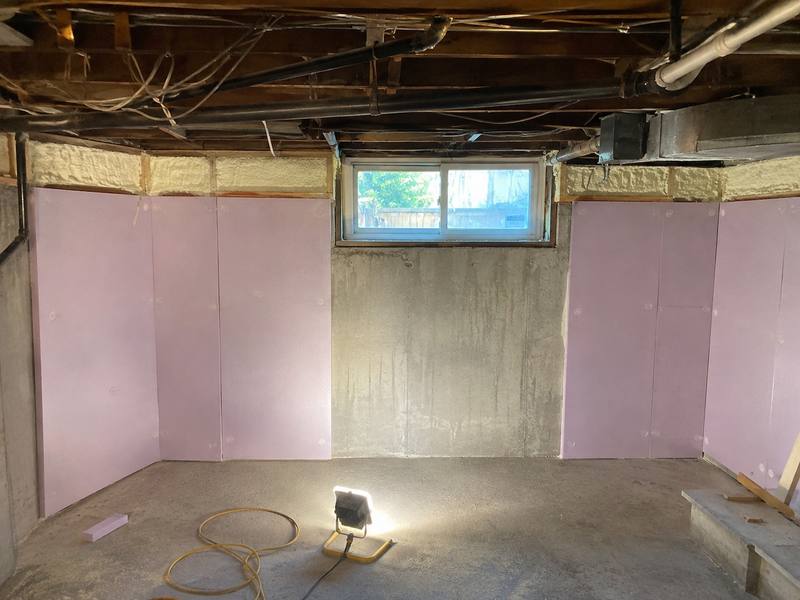
Closed-cell spray foam suits the rim joist. One pass seals the gaps and insulates, and it keeps warm indoor air, and the moisture in it, off the cold wood.
Basement walls are a separate decision. Bare concrete or block needs insulation tight against the masonry so damp air never reaches the cold surface. We don't do framing, so we tell you what the wall needs before anyone builds over it. The wall options are covered on the basement and crawl space insulation page.
Nearby: Glencairn, North Park and Downsview
Glencairn is one of the closest neighbourhoods we serve. See our Glencairn spray foam page.
North Park is close by too: spray foam insulation in North Park.
For Downsview, there's a separate Downsview spray foam page.
Local details for Lawrence Manor
- Postal codes: M6A
- Distance: About 6 km away in a straight line
- Nearby: Glencairn, North Park, Downsview
About Lawrence Manor: Lawrence Manor, ON on Wikipedia · Lawrence Manor on Google Maps
FAQ
Insulation questions from Lawrence Manor
We match the material to each part of the top floor: closed-cell spray foam on the sloped ceilings, and blown-in fibreglass or cellulose on the flat ceiling and the attic floor behind the knee walls. The slopes get foam because there's little room there, and foam does the most in a thin layer; the drywall on a slope has to come off for that, and the quote says who puts it back. The knee wall itself needs insulation too, so the heated rooms are closed off from the cold space behind it.
Yes, cellulose can be blown into the closed walls of a 1940s house as long as the cavities are empty or close to it. Our crew drills small holes in each stud bay, dense-packs the cellulose until the cavity is full, then plugs the holes. If the walls still have old knob-and-tube wiring, get an electrician to look at it before anything is filled.
Often both are worth doing, but they are separate decisions. The rim joist is a short, leaky stretch that closed-cell foam handles well, and it is a small job on its own. Filling empty walls with dense-pack cellulose deals with the cold outside walls upstairs and down.

Get a quote
Arrange an insulation visit in Lawrence Manor
Call (437) 563-1415 or send the form. Tell us which room is cold, drafty or hot. We will come look at the spot behind it and give you a straight written quote.